
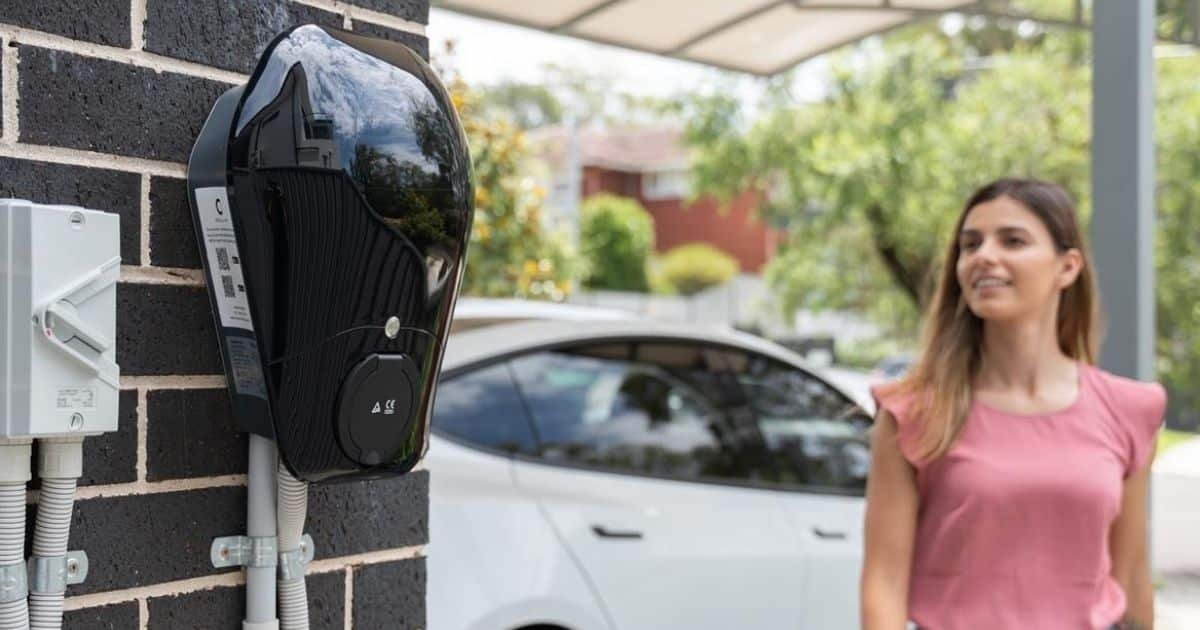
Electric vehicle ownership becomes significantly more convenient when you can charge at home. Instead of depending on public charging stations, a properly installed home EV charger allows you to plug in when you arrive home and have your vehicle ready when you need it.
However, choosing a home EV charger isn't simply about buying the highest-powered charger available. Your vehicle's AC charging capability, property's available electrical capacity, charger location, electrical protection, smart features and installation requirements all need to work together.
The installation process also varies significantly according to the type of property. Installing an EV charger in a villa, townhouse, farmhouse or standalone residential property is very different from installing one in an apartment or residential building, where building-management coordination and approvals are usually required.
This guide explains how to choose and professionally install the right home EV charging solution in Dubai and across the UAE.
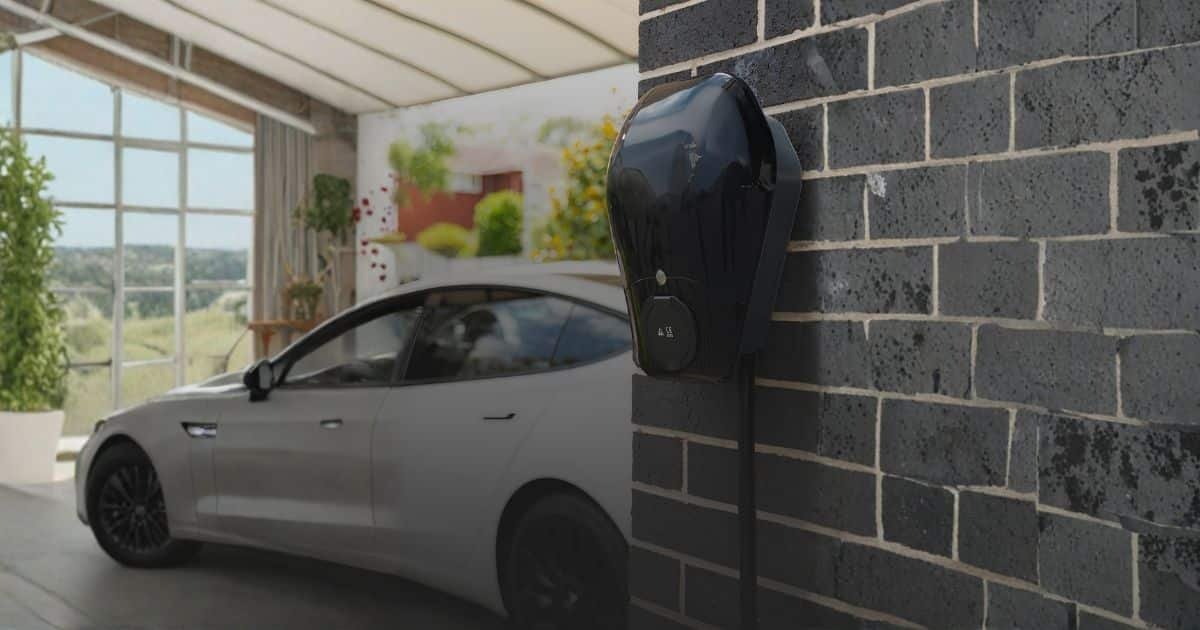
1. Choosing the Right EV Charger for Your Home
The first question when choosing a home charger shouldn't be:
“What is the most powerful charger available?”
A better question is:
“How much AC charging power can my vehicle accept, and how much electrical capacity does my property have available?”
Your EV charger supplies AC power, but the vehicle's On-Board Charger (OBC) ultimately determines how much AC power the vehicle can accept.
For example, connecting an EV with an 11kW onboard charger to a 22kW wallbox doesn't make the vehicle charge at 22kW. The vehicle will normally draw only the maximum power it supports.
7kW Home EV Chargers
A 7kW charger can be a practical solution for vehicles with lower AC charging capability and properties where single-phase charging is appropriate.
It may also be sufficient for drivers who normally charge overnight and don't require the maximum available AC charging speed.
11kW Home EV Chargers
An 11kW three-phase charger provides an excellent balance between charging speed and electrical demand.
Many modern electric vehicles support 11kW AC charging, making this a practical home-charging configuration where an appropriate three-phase supply and sufficient capacity are available.
However, there is one significant limitation of 11kW Charger. Electric or plugin hybrid cars that take power on single phase 7kW, can have a maximum charging speed of 3.4kW ONLY. This is because the 11kW charger delivers 3.4kW on each phase, and the car takes power only on one phase.
22kW Home EV Chargers
A 22kW charger can deliver up to approximately 32A per phase on a suitable three-phase supply.
DEWA's current AC EVSE technical specifications provide for nominal power up to 22kVA per charging point and IEC 62196-2 Type 2 connectivity.
However, installing a 22kW charger doesn't mean every EV will charge at 22kW.
If your vehicle accepts approximately:
7kW → it will charge at its supported rate
11kW → it will normally draw up to approximately 11kW
22kW → it can utilize the charger's full output when sufficient electrical capacity is available
This makes a 22kW smart charger particularly attractive for homeowners who want greater flexibility and future compatibility.
For a deeper comparison, read our guide:
The Ultimate Guide to 22kW EV Chargers in Dubai and the UAE
You can also explore:
2. Check Your Home's Electrical Capacity
A professional electrical assessment should ideally take place before finalizing the charger and installation arrangement.
An EV charger can become one of the largest continuous electrical loads in a residential property.
A professional site assessment can consider:
- Available electrical supply
- Single-phase or three-phase configuration
- Main electrical panel capacity
- Existing connected load
- Distribution-board condition and available space
- Proposed charger capacity
- Cable route and distance
- Earthing arrangements
- Charger mounting location
- Required electrical protection
- Potential need for Dynamic Load Management
Having a three-phase supply doesn't automatically mean that a property has enough spare capacity to continuously operate a 22kW charger alongside air conditioning, water heating and other substantial household loads.
Dynamic Load Management
Where electrical capacity is constrained, Dynamic Load Management (DLM) can provide a smarter solution.
A compatible DLM system monitors the property's electrical consumption and adjusts EV charging power according to the capacity available.
When household consumption increases, the charger's available power can be reduced. When other loads decrease, more capacity can become available for charging.
This helps optimize the property's existing electrical capacity while reducing the risk of overload or nuisance tripping.
3. Smart EV Charging at Home
Modern EV charging is about considerably more than delivering electricity to the vehicle.
Depending on the charger and connected platform, a smart EV charger can provide features such as:
- Remote charging control
- Charging schedules
- Charging history
- Energy consumption in kWh
- Charging-session duration
- Charging-cost information
- User authorization
- RFID access
- Remote diagnostics
- Firmware updates
- Dynamic Load Management integration
Bluetooth, Wi-Fi and Cloud Connectivity
Different chargers offer different connectivity methods.
Bluetooth is useful for nearby configuration and control but normally has limited range.
Wi-Fi allows the charger to connect through the property's internet connection.
Cloud-connected smart charging can provide much greater flexibility by allowing the charger to communicate with an online charging-management platform.
COPAK's VOX PRO Smart Charger, for example, is designed for connected EV charging applications.
Explore the VOX PRO Smart EV Charger
4. Wallbox or Portable EV Charger?
Both solutions have a place in residential charging, but they serve different requirements.
Wall-Mounted EV Charger
A permanently installed wallbox is generally the preferred solution for regular home EV charging.
Benefits can include:
- Convenient everyday charging
- 7kW, 11kW and 22kW options
- Smart connectivity on compatible models
- Dedicated electrical protection
- Better cable management
- Dynamic Load Management options
- Clean and professional appearance
- Permanent charging location
Wallboxes are particularly suitable for villas, townhouses and properties with dedicated parking spaces.
Portable EV Charger
A portable EV charger provides greater flexibility because it isn't permanently mounted to one location.
Portable charging can be useful for:
- Travelling
- Backup charging
- Temporary accommodation
- Charging at multiple properties
- Locations where permanent mounting isn't practical
COPAK's residential charging solutions include lower-powered portable chargers that can operate from an appropriate domestic outlet, as well as higher-powered portable charging solutions designed for suitable industrial sockets and correctly installed electrical circuits.
The important consideration is that the socket, wiring and electrical protection must be suitable for the charger's continuous electrical load.
5. Choosing the Right Location for Your EV Charger
Charger location affects convenience, safety, appearance and installation cost.
Ideally, the charger should be positioned:
- Close to the vehicle's normal parking position
- Where the charging cable comfortably reaches the vehicle inlet
- Away from unnecessary vehicle-impact risks
- Where it remains accessible for operation and maintenance
- Along a practical cable route from the electrical source
- Where suitable environmental protection can be provided
For outdoor installations, both the charger and mounting arrangement should be suitable for the UAE environment.
Where an appropriate wall isn't available, a dedicated pedestal can provide a clean and professional freestanding charging installation.
COPAK also provides heavy-duty mounting solutions for EV chargers.
Heavy-Duty Dual-Gun Pedestal Stand with Canopy
6. Home EV Charger Installation: Villas vs Apartments
One of the most important distinctions in residential EV charging is property type.
The installation process for a villa or standalone residential property can be considerably different from an installation within an apartment building.
EV Charger Installation for Villas, Townhouses & Standalone Homes
For villas, townhouses, farmhouses and standalone residential properties, COPAK offers Fixed Price EV Charger Installation Packages.
Our standard installation package includes the complete installation of the charger with up to 5 metres of installation from the Main Electrical Panel to the EV charger.
The package includes the essential materials and safety components required for a standard professional installation, including:
- Power cable
- Required electrical safety and protection components
- Conduits and cable containment
- Charger mounting
- Electrical connection
- Installation labour
- Testing and commissioning
This approach gives customers a clear price for a standard home installation without having to individually calculate every cable, conduit, safety component and labour item.
What if the charger is more than 5 metres from the electrical panel?
If the required cable route exceeds the 5 metres included in the standard package, additional cable installation is charged at the applicable per-metre rate.
Additional charges may also apply where:
- Concealed cable installation is requested
- Additional civil works are required
- The electrical panel requires modifications
- Special mounting arrangements are needed
- Other works fall outside the standard package scope
This keeps the pricing straightforward: a standard installation receives a fixed package price, while additional or specialized work is charged according to the extra scope required.
View Fixed Price Home EV Charger Installation Packages
For more information:
Learn More About Home EV Charger Installation
7. Apartment EV Charger Installation
Installing an EV charger in an apartment or residential building requires a different process.
Unlike a standalone villa, an apartment parking space is normally located within a shared building environment. The electrical source may be some distance from the parking space, while the proposed cable route may pass through common areas controlled by the building management.
For this reason, apartment EV charger installation normally begins with a site survey in collaboration with the building management team.
Step 1 — Site Survey & Building Coordination
COPAK's technical team coordinates with the building management team to determine:
- Suitable electrical power source for the charger
- Customer's parking-space location
- Proposed charger installation position
- Available electrical capacity
- Practical cable route
- Cable containment requirements
- Electrical-panel requirements
- Building-specific technical requirements
- Safety requirements
- Overall scope of work
The site survey allows us to develop a practical installation solution before preparing the commercial offer.
Step 2 — Proposal & Customer Approval
Following the site survey, COPAK prepares an installation proposal based on the actual site conditions and required scope of work.
Once the customer approves the offer, we proceed with the technical documentation required for building-management approval.
Step 3 — Technical, Contractor & HSE Documentation
COPAK prepares and submits the documents required by the building management team for review.
Depending on the property and management requirements, these can include:
- Method Statement
- Risk Assessment
- Contractor's All Risk Insurance
- COPAK Trade License
- Emirates ID
- DEWA / TAQA / SEWA / EtihadWE Approved Contractor Proof, as applicable
- Installation drawings
- EV charger technical datasheet
- Other project-specific documentation requested by the building management
This gives the facilities, engineering or building-management team the information required to review the proposed installation method, electrical works and safety arrangements.
Step 4 — Building Management Approval & Work Permit
The building management reviews the submitted technical and contractor documentation.
Once the proposal and documentation are approved, the building management team approves or issues the necessary work permit.
The physical installation then proceeds according to the approved scope and site requirements.
Step 5 — EV Charger Installation
Depending on the approved scope, apartment installation work can include:
- Electrical protection installation
- Power cabling
- Cable trays, conduits or other containment
- Cable routing through basement/common parking areas
- Electrical-panel modifications where required
- Charger wall mounting or pedestal installation
- Electrical termination
- Isolation
- Identification and labelling
- Testing and commissioning
- Smart charger/application configuration
How Long Does an Apartment EV Charger Installation Take?
Once the required building approvals and work permit are in place, a single apartment EV charger installation will typically take from approximately one day to four or five days, depending on the scale and complexity of the work.
A straightforward installation with a nearby power source and short cable route can be completed relatively quickly.
A project involving long cable routes through basement parking, extensive containment, electrical modifications or more complex building requirements can take several days.
The building-management review and approval period is separate from the physical installation duration and varies from one building to another.
8. Professional EV Charger Installation Process
Whether the charger is being installed in a villa or apartment, professional installation requires more than simply mounting the charger and connecting a cable.
A typical COPAK installation can include:
1. Electrical Assessment
Assess the available electrical supply, connected load and proposed charger capacity.
2. Installation Planning
Determine the charger location, cable route, mounting arrangement and electrical requirements.
3. Electrical Protection
Install the appropriate dedicated protection and isolation components according to the installation design and charger requirements.
4. Power Cable Installation
Install correctly sized power cabling and suitable containment between the electrical panel or approved power source and the charger.
5. Charger Installation
Wall-mount the charger or install an appropriate pedestal where required.
6. Electrical Connection
Complete charger termination and associated electrical works.
7. Testing & Commissioning
Test the electrical installation and verify correct charger operation before handover.
8. Smart Charger Setup
Where applicable, configure charger connectivity, application access and user settings.
9. Customer Handover
Explain normal charging operation, isolation, application controls and basic safety procedures.
9. DEWA and UAE Requirements for Residential EV Chargers
EV charger installations need to comply with the applicable electrical and authority requirements for the property and emirate where the charger is being installed.
In Dubai, DEWA maintains a regulatory framework and technical requirements for EV charging infrastructure. Other emirates may fall under the requirements of authorities such as TAQA Distribution, SEWA or EtihadWE, depending on the location.
The exact approval and technical requirements can vary according to:
- Emirate
- Property type
- Electrical connection
- Charger type and capacity
- Residential or shared-building environment
- Existing electrical infrastructure
- Building-management requirements
For this reason, homeowners should avoid assuming that every EV charger installation follows exactly the same approval process.
For a detailed discussion specifically about Dubai requirements, read:
DEWA EV Charger Installation Requirements: 2026 Guide
10. How Much Does Home EV Charger Installation Cost in the UAE?
The installation price depends significantly on the type of residential property.
Villas, Townhouses, Farmhouses & Standalone Residential Properties
COPAK provides Fixed Price Installation Packages for standard residential installations.
The standard package covers the complete installation of the EV charger with up to 5 metres of installation from the Main Electrical Panel, including the required:
- Power cable
- Electrical safety components
- Conduits
- Cable containment
- Charger installation
- Electrical connection
- Testing
- Commissioning
If the required cable route exceeds the included 5 metres, the additional installation is charged at the applicable per-metre rate.
Concealed cable installations and other non-standard works are priced separately according to the additional scope required.
View COPAK Fixed Price EV Charger Installation Packages
Apartments & Residential Buildings
Apartment EV charger installations are generally site-specific and quoted following a site survey.
The installation cost can depend on:
- Distance between the power source and parking space
- Required cable size and length
- Cable containment
- Electrical-panel modifications
- Distribution-board works
- Building-management requirements
- Technical drawings and documentation
- Civil works
- Charger mounting arrangement
- Electrical protection and isolation requirements
Following the site survey and coordination with building management, COPAK provides a quotation based on the proposed installation solution.
11. Why Choose COPAK for Home EV Charger Installation?
COPAK provides complete residential EV charging solutions across the UAE.
Our approach is not simply to supply a charger. We help customers develop the complete charging solution appropriate for their vehicle, property and electrical infrastructure.
Our residential EV charging services can include:
- 7kW, 11kW and 22kW charging solutions
- Smart EV chargers
- Fixed-price villa installation packages
- Apartment EV charger installations
- Professional site surveys
- Electrical load assessments
- Dedicated EV charging circuits
- Dynamic Load Management
- Wall-mounted and pedestal installations
- Outdoor EV charging solutions
- Building-management coordination
- Method Statements and Risk Assessments
- Project drawings and technical documentation
- Charger application setup
- Testing and commissioning
- Authority-related support where applicable
- Technical and after-sales support
Whether you live in a villa with a straightforward charger installation or an apartment requiring building-management coordination and a complex cable route, COPAK can provide a solution tailored to the property.
Home EV Charger Installation Services
Frequently Asked Questions
What size EV charger should I install at home?
The appropriate charger depends on your vehicle's maximum AC charging capability, available electrical supply and daily charging requirements. Common residential AC charger capacities include 7kW, 11kW and 22kW.
A professional assessment can help determine the most appropriate solution rather than simply choosing the charger with the highest advertised power.
Will a 22kW charger make every electric car charge at 22kW?
No. The vehicle's onboard charger determines the maximum AC power it can accept.
For example, a vehicle limited to 11kW AC will normally charge at up to approximately 11kW even when connected to a 22kW wallbox.
Do I need three-phase electricity for a 22kW home EV charger?
Yes. Achieving approximately 22kW AC charging requires a suitable three-phase electrical supply and sufficient available capacity.
The property's electrical infrastructure should be assessed before committing to a 22kW installation.
Can I install an EV charger outdoors in Dubai or the UAE?
Yes, provided the charger, electrical installation and mounting arrangement are appropriate for outdoor use and comply with applicable requirements.
Environmental protection, direct sunlight, rain exposure, mounting, cable routing and accessibility should all be considered when designing an outdoor charging installation.
Is a smart EV charger worth installing at home?
For many homeowners, yes.
Depending on the charger and connected platform, smart functionality can provide charging schedules, remote control, energy-consumption monitoring, charging history, user management and other useful features.
Smart chargers can also support technologies such as Dynamic Load Management when compatible equipment is used.
What is Dynamic Load Management for an EV charger?
Dynamic Load Management monitors the property's electrical consumption and adjusts the charger's available power according to the remaining electrical capacity.
This can be particularly useful where the property doesn't have enough spare capacity to continuously operate the charger at maximum output alongside other high-power appliances.
Can I use a portable EV charger instead of a wallbox?
Yes, provided the outlet, circuit, wiring and electrical protection are suitable for the charger's continuous electrical load.
Portable chargers can be useful for travel, backup charging and temporary locations. For regular home charging, a professionally installed wallbox generally provides a more permanent and convenient solution.
Does COPAK offer fixed-price EV charger installation for villas?
Yes.
COPAK provides Fixed Price EV Charger Installation Packages for villas, townhouses, farmhouses and standalone residential properties.
The standard package includes a complete installation with up to 5 metres from the Main Electrical Panel to the charger, including the required power cable, safety components, conduits, installation, connection, testing and commissioning.
Additional cable length, concealed installation and other non-standard works are charged separately.
Can COPAK install an EV charger in my apartment parking space?
Yes, subject to electrical feasibility and the necessary building-management approvals.
COPAK can coordinate the site survey with the building management team, identify a suitable electrical source and cable route, prepare the required documentation and carry out the installation after the necessary approvals and work permit are obtained.
Do I need building-management approval for an apartment EV charger?
Typically, yes.
Apartment installations often involve common areas or shared building infrastructure. Building management therefore normally needs to review and approve the proposed electrical works and installation route before the project can proceed.
What documents can COPAK provide for an apartment EV charger installation?
Depending on the building's requirements, COPAK can prepare documents including:
- Method Statement
- Risk Assessment
- Contractor's All Risk Insurance
- Trade License
- Emirates ID
- Applicable DEWA / TAQA / SEWA / EtihadWE approved-contractor proof
- Installation drawings
- Charger technical datasheet
Additional documents can be provided according to project or building-management requirements.
How long does an apartment EV charger installation take?
After the required building-management approvals and work permit have been obtained, a single installation typically takes approximately one to four or five days, depending on the scale and complexity of the work.
The building-management review and approval period is separate and can vary between properties.
How much does an EV charger installation cost for an apartment?
Apartment installations don't normally have one standard price because every building can have a different power source, cable route, parking arrangement and management requirement.
COPAK therefore carries out a site survey and provides a quotation according to the actual installation scope.
How much does a villa EV charger installation cost?
COPAK offers fixed-price packages for standard villa, townhouse, farmhouse and standalone residential installations.
Additional charges may apply for cable runs beyond the included 5 metres, concealed installations, additional electrical works or other requirements outside the standard package.
Do I need DEWA approval for a home EV charger in Dubai?
The applicable approval requirements depend on the property and proposed installation. DEWA maintains regulations and processes governing EV charging infrastructure in Dubai.
For installations outside Dubai, other relevant electricity authorities and property/building requirements may apply.
Step 2: Mobile Application – A Must-Have Feature
A mobile app for your EV charger might seem like a luxury, but it’s a game-changer. Here’s what to look for:
1. Bluetooth-Based Apps
- How it works: Only functions when you’re near the charger.
- Drawbacks: Limited to initial setup and configuration. Not practical for daily use.
2. WiFi-Based Apps
- How it works: Works when both your phone and charger are connected to the same WiFi network.
- Drawbacks: Limited to your home network range.
3. Cloud-Based Apps
- How it works: Allows remote monitoring and control from anywhere in the world, as long as the charger is connected to the internet.
- Why it’s the best: Offers real-time data, scheduling, and advanced features. Some chargers include this for free, while others may require a subscription.
Pro Tip: Always opt for a charger with a cloud-based app for maximum convenience and functionality.
Step 3: Wall Box Charger vs. Mobile Charger
When it comes to home EV charging, you have two main options: Wall Box Chargers and Mobile Chargers. Here’s a breakdown of their pros and cons:
Wall Box Chargers
-
Available in: 7 KW, 11 KW, and 22 KW.
-
Pros:
-
Permanent installation for a clean, professional look.
-
Higher power output for faster charging.
-
-
Cons:
-
Higher upfront cost.
-
Not portable.
-
Mobile Chargers
-
Available in: 3 KW, 7 KW, and 22 KW.
-
Pros:
-
Portable and versatile.
-
Ideal for apartment parking lots or areas with vandalism concerns.
-
Affordable upgrade options (e.g., Tesla’s 3 KW mobile charger can be upgraded to 7 KW for just AED 350).
-
-
Cons:
-
Slightly slower charging compared to high-power wall boxes.
-
Overnight charging may provide enough time to replenish daily driving energy. The result depends on starting battery level, available power, vehicle charging limits and time connected. Do not assume every EV can charge from empty to full overnight.
Step 4: Installation Process
Assess Your Electrical System: Ensure your home’s electrical system can support the charger’s power requirements.
Choose the Right Location: Install the charger in a convenient, accessible spot near your parking area.
Hire a Professional: Work with a certified electrician or EV charging solutions provider (like Copak) to handle the installation safely and efficiently.
Apply for Permits: If required, obtain necessary approvals from local authorities or utility providers (e.g., DEWA in Dubai). Copak has excellent experience acquiring approvals from UAE authorities.
Why Choose Copak for Your Home EV Charger Installation?
At Copak, we specialize in providing end-to-end EV charging solutions tailored to your needs. From helping you select the right charger to seamless installation and ongoing support, we’re here to make your EV journey smooth and hassle-free.
Ready to power up your EV at home? Contact Copak today for expert advice and professional installation services!
Explore more about Home EV Charger Installation here.