
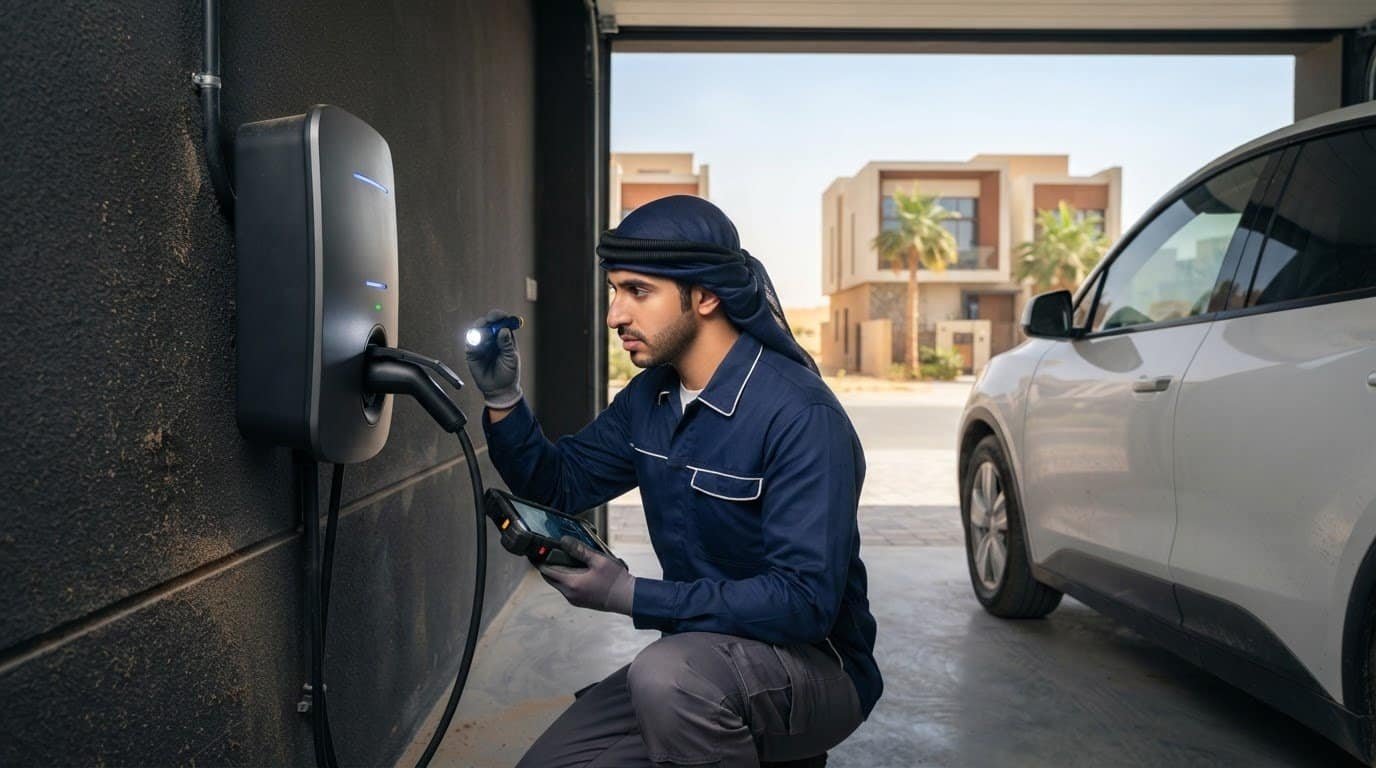
A slower charging session in a UAE summer isn’t always a sign that your charger is failing. High temperatures can cause a charger or vehicle to reduce power as a protective measure, while dust and sand may affect connectors and communication. Regular EV charger maintenance UAE owners can rely on helps catch these issues before they disrupt a charging session or contribute to premature wear.
If you’re concerned about heat, dust ingress or what to check after a fault, you’re right to treat maintenance as more than an occasional clean. Electrical equipment in the UAE’s demanding climate needs careful inspection, and repairs should take account of the requirements that apply to the installation and its emirate.
This guide explains practical cleaning and inspection steps, signs that call for professional attention, and how to approach heat-related charging slowdowns. It also clarifies why compliance questions should be checked with the relevant authority or qualified professional, helping you protect your equipment, support reliable charging and maintain safety over the long term.
Key Takeaways
- Learn how UAE heat, sand and dust can affect charging performance, connectors and equipment condition.
- Use a structured EV charger maintenance UAE checklist to plan routine visual checks and identify when professional attention may be needed.
- Understand how to inspect your charging station safely without opening the unit or handling internal electrical components.
- Recognise clues that may help distinguish a vehicle-side issue from a charger-side fault before arranging support.
- See how professional technical checks can help homeowners and facility managers support safer, more reliable charging over time.
The Importance of EV Charger Maintenance in the UAE Climate
An EV charger in the UAE faces more than routine wear. Summer heat, airborne dust and outdoor exposure can all affect performance over time. Proactive EV charger maintenance UAE owners and facility managers can arrange helps identify developing issues early, protect charging reliability and keep safety checks on the maintenance schedule.
Charging may slow during peak summer heat. That can be a protective response rather than a fault: chargers and vehicles may reduce power to manage temperature. Maintenance helps assess whether heat is the likely cause or whether the unit needs attention.
This video offers a general look at charger faults and troubleshooting:
Environmental Stressors: Heat and Humidity
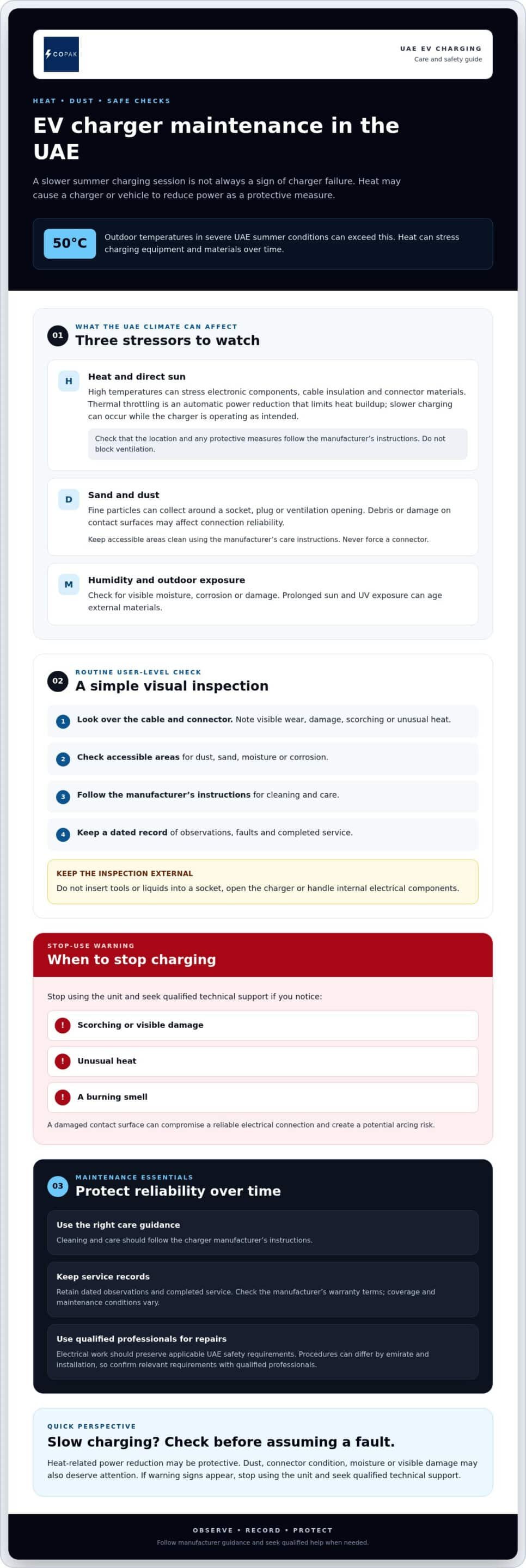
In severe UAE summer conditions, outdoor temperatures can exceed 50°C. Heat increases stress on electronic components, cable insulation and connector materials. Thermal degradation is the gradual deterioration of materials or components after repeated or prolonged exposure to high temperatures. Humidity can add to environmental stress, so check the unit for visible moisture, corrosion or damage and follow the manufacturer’s care instructions.
Thermal throttling is an automatic reduction in charging power to limit heat buildup. It can make charging slower during hot periods, even when the charger is operating as intended. Outdoor units also need suitable protection from direct sun and UV exposure; prolonged exposure can age external materials. Check that the installation location and any protective measures suit the charger’s instructions, without blocking ventilation.
Dust Ingress and Mechanical Wear
Fine sand and dust can collect around a Type 2 socket, plug and ventilation openings. Particles in a socket may interfere with the connector’s locking mechanism, while debris or damage on contact surfaces can compromise a reliable electrical connection. Poor contact can create a safety risk, including potential arcing. Don’t force a connector or continue charging if you notice scorching, unusual heat, a burning smell or visible damage. Stop using the unit and seek qualified technical support.
Keep the exterior and accessible connector area clean using the manufacturer’s instructions. Don’t insert tools or liquids into the socket, open the charger or attempt internal electrical work. For more context on charger selection and installation considerations, see this EV charger installation service guide. COPAK’s VOX PRO wall charger is one option to review for a charging setup suited to your requirements.
Maintenance also supports warranty documentation: keep service records and check the manufacturer’s terms, since coverage and maintenance conditions vary. For residential and commercial units alike, repairs should preserve applicable UAE safety requirements. Authority procedures can differ by emirate and installation, so have qualified professionals assess electrical work and confirm the relevant requirements. For general terminology on connectors and charging equipment, consult this overview of EV charging technology and standards.
Comprehensive EV Charger Maintenance Checklist
A simple schedule helps homeowners and facility managers spot wear before it interrupts charging. The intervals below are practical planning guidance, not a substitute for the charger manufacturer’s instructions or an assessment by a qualified professional. Keep a dated record of observations, faults and completed service for each unit.
Monthly: User-Level Visual Checks
- Inspect cables and plugs: Look for cracks, fraying, kinks, discolouration or other visible damage. Check the Type 2 plug and socket for dust or debris, but don’t scrape the pins or apply cleaner unless the manufacturer specifically approves the product and method.
- Check the enclosure and mounting: Look for visible damage, loose-looking fixings, blocked ventilation openings or signs of water ingress. Don’t remove covers or tighten electrical connections yourself.
- Check charging operation: Confirm the charger starts and ends sessions normally, and note any recurring warnings, connectivity drops or interruptions.
- For dual-gun units: Inspect both cables and connectors, and check that each side shows its normal status. Record whether an issue affects one connector or both.
Quarterly: Site and Digital Review
Review the installation area for dust build-up, damaged conduits and cable glands that appear loose or deteriorated. These components help protect wiring from environmental exposure, but users should report concerns rather than open the unit or attempt repairs. Check Wi-Fi or 4G connectivity, where fitted, and confirm that smart charging and backend functions remain available.
For commercial dual-gun equipment such as COPAK’s Mag Duo dual-gun charger, review usage or fault records for repeated interruptions, abnormal status indications or a connector that is consistently unavailable. A qualified technician should investigate electrical issues or configuration changes.
Annually: Professional Safety and Condition Review
Arrange a qualified inspection based on the manufacturer’s guidance, site conditions and usage. A technician can assess mounting, cabling, protective devices, electrical connections and the integrity of conduits and cable glands. RCD, or residual current device, checks involve electrical safety equipment and should follow the manufacturer’s procedure and be performed by a qualified person. Don’t open the charger or carry out internal electrical work.
The VOX PRO 22kW Smart Wallbox supports smart charging and OCPP, a communication protocol used between compatible chargers and backend systems. Follow the manufacturer’s instructions for firmware updates and check that the charger, connectivity and backend remain compatible. Updates may include changes to thermal-management behaviour, but don’t assume every update does; review release information before installation.
For a tailored maintenance or technical-support enquiry, contact COPAK with the charger model and any recorded fault details. A consistent EV charger maintenance UAE routine helps turn observations into timely, informed action.
How to Safely Inspect Your EV Charging Station
Keep user inspections external and visual. Don’t remove the charger cover, reach into a socket, handle wiring or attempt internal electrical work. Any internal inspection or repair should be handled by a qualified technician.
Before cleaning, stop the charging session, disconnect the vehicle if it’s safe to do so, and isolate the charger using the designated user-accessible switch or procedure in the manufacturer’s instructions. If you can’t identify a safe isolation method, don’t clean the unit; seek professional guidance. Isolation doesn’t make it safe to open the charger.
Step-by-Step Visual Inspection
- Read the status indicators: Check the display or LEDs for error codes and amber or red warnings. Note the exact message and when it appears instead of repeatedly resetting the charger.
- Examine the cable and connector: Look for cuts, cracks, fraying, exposed conductors, melting or heat discolouration on a Type 2 socket or tethered plug. Don’t use a damaged cable or connector.
- Look over the installation: Check for visible enclosure damage, water ingress, loose-looking mounting or deteriorated cable entry points. If a protective weatherproof EV charger enclosure is installed, confirm from the outside that it appears secure. Don’t remove panels to inspect behind it.
Stop using the charger and seek qualified technical help if you notice scorching, a burning smell, unusual heat, exposed wiring, water inside the unit, repeated protective-device trips or recurring fault warnings. Don’t touch wet or visibly damaged equipment. Keep people away and, if safe, isolate the supply using its designated control. Don’t attempt to diagnose or repair the electrical fault yourself.
Cleaning Protocols for UAE Conditions
After isolating the charger and checking its manual, wipe the exterior casing with a clean, dry or slightly damp microfibre cloth. Avoid abrasive chemicals and high-pressure washers, especially around displays, seams, sockets and cable entries. Never spray liquid directly into the unit.
Take care if sand has collected around a charging port. Don’t insert tools, cloths or fingers into the socket. Use compressed air only if the manufacturer permits it and follow the specified method; forceful air can drive debris deeper or damage components. If sand is lodged around contact pins or the locking mechanism, stop and arrange a qualified inspection.
These checks make EV charger maintenance UAE users perform safer while keeping internal electrical work with qualified technicians. If you find damage or a fault you can’t resolve by following the manufacturer’s instructions, contact COPAK technical support with the charger model and any displayed error code.
Troubleshooting Common Issues and When to Call COPAK
Charging interruptions can come from the vehicle, charger, electrical supply or network connection. Note what happened before changing settings or restarting equipment. Repeated resets can erase useful clues and won’t resolve a physical or electrical fault.
Connectivity and Smart Charging Errors
If a smart charger appears offline or reports an OCPP communication error, check whether the site’s Wi-Fi or 4G connection is available and whether the management platform reports an outage. OCPP is the communication protocol between a compatible charger and backend system; a fault message may relate to connectivity or platform configuration rather than the charging hardware itself.
For a VOX PRO smart wallbox, check its app and user instructions for any supported restart or reset procedure. Use only documented steps, and don’t change electrical settings or open the unit. If the problem persists, record the displayed message and when the connection drops. For background on charger capacity and performance, see the guide to 22kW EV chargers.
Vehicle-Side or Charger-Side Fault?
A careful comparison can help narrow the source, but it won’t replace diagnosis. If safe and practical, check whether the vehicle charges at another known-working charger, or whether another compatible vehicle can charge at yours. A problem that follows the vehicle may point to its charging system; one that stays with the charging point may suggest the charger, connection or site supply. Compatibility and settings can also affect the result.
- Charging stops repeatedly: Note the time, charger status and any vehicle or app message.
- Power appears reduced: Record whether it occurs only during hot conditions or with other site loads operating. Heat protection or configured load management may affect output.
- A circuit trips: Stop using the charger and arrange qualified assessment. A trip may indicate a fault or an installation issue. For private residential charging, compatible DLM can help manage available capacity when correctly configured, but it does not replace fault investigation or electrical protection.
Physical Damage and Electrical Faults
Don’t use a cable that has been run over, or a plug that has been dropped, until it has been checked for cracks, deformation, exposed conductors or damaged contact surfaces. Stop charging if you notice unusual humming, a burning smell, scorching, excessive heat or repeated protective-device trips. Don’t open the charger or attempt repairs. Internal electrical work should be handled by qualified COPAK technicians.
For EV charger maintenance UAE troubleshooting, provide COPAK with the charger model, error message, when the fault occurs, vehicle details and any safe checks already completed. Contact COPAK about a charger fault to discuss the next appropriate step.
Professional Maintenance and Technical Support in the UAE
Routine visual checks help identify concerns, but electrical testing, internal inspection and fault diagnosis require professional expertise. For a home charger or commercial fleet, planned health checks can help assess equipment condition, review recurring faults and identify issues that aren’t visible from the outside. Set the schedule according to the manufacturer’s guidance, site conditions and equipment use rather than treating an annual visit as a universal regulatory requirement.
COPAK provides EV charging technical support nationally. Maintenance should account for the requirements that apply to the specific installation, property and relevant local authority. DEWA and TAQA Distribution/ADDC requirements are not interchangeable, and procedures can vary across the UAE. Confirm the applicable requirements for your site before maintenance or repair work proceeds.
What Professional Maintenance Can Cover
A qualified professional can assess electrical and mechanical condition, investigate charger faults, and review relevant operating or service records. For a commercial fleet, planned checks can help facility managers understand which units are unavailable, whether interruptions are recurring, and what follow-up may be needed. Ask for a clear record of the inspection, findings and recommended actions so the maintenance history is useful for future reviews.
Before booking, confirm the provider’s experience with the charger model and the scope of work. Internal electrical tasks should be handled by qualified personnel. Any replacement components, diagnostic methods or proposed repair should be explained before work proceeds. COPAK’s technical support can help customers assess EV charging equipment and appropriate next steps without treating every slowdown or connectivity issue as a hardware failure.
Planning Support for Homes and Fleets
For a service enquiry, have the charger make and model, installation location, visible error messages and a brief fault history ready. Commercial site managers can also note which charging points are affected and whether the issue occurs across multiple units. This information helps clarify the concern before a site assessment or maintenance visit is arranged.
COPAK offers residential EV charger installation packages for standard installations, but installation and ongoing maintenance are separate scopes of work. Confirm what’s included in any proposed service rather than assuming an installation package covers future health checks. For technical documentation and product guidance, visit the COPAK Resources & Support page.
A consistent EV charger maintenance UAE plan supports safer operation and gives property owners and fleet managers a clearer view of equipment condition. To discuss a fault or technical support for your charging setup, contact COPAK with the charger details and site information.
Keep Your Charging Setup Ready for the Road Ahead
Protecting your charger is an ongoing task. Follow the manufacturer’s care instructions, keep a record of faults and service, and leave internal electrical work to qualified professionals. These habits help you respond to wear or performance changes before they become larger concerns.
Maintenance and repairs should also account for the requirements that apply to your specific installation. Authority procedures can differ across the UAE, so confirm the relevant requirements for your site rather than assuming one set of rules applies everywhere.
COPAK provides EV charging technical support nationally. Share your charger model and any fault details to discuss an appropriate next step. Book professional EV charger maintenance and take a considered step towards reliable charging over the long term.
Frequently Asked Questions
Is regular maintenance required for home EV chargers in the UAE?
Routine care is sensible, but whether a particular maintenance schedule is formally required depends on the installation, applicable authority requirements and charger manufacturer’s instructions. Check the manual and keep the charger’s service and fault records. You can visually inspect the cable, plug and casing, but don’t open the unit or perform electrical work. For EV charger maintenance UAE homeowners should confirm repair or compliance questions with a qualified professional familiar with the site requirements.
How often should I have my EV charging station professionally inspected?
Follow the charger manufacturer’s maintenance guidance and consider the unit’s use, location and condition when planning a professional inspection. An outdoor charger exposed to dust or frequent use may warrant closer attention than one in a protected area. Arrange an assessment sooner if you notice recurring errors, damaged cables, unusual heat or charging interruptions. Don’t treat an annual check as a universal regulatory requirement; confirm the appropriate schedule for your equipment and installation.
Can I clean my EV charger Type 2 cable with water?
Don’t immerse the cable or connector, and don’t spray water into a Type 2 plug or socket. For the exterior cable, follow the manufacturer’s cleaning instructions; a slightly damp cloth may be suitable for accessible outer surfaces if permitted. Disconnect and isolate the charger according to its instructions before cleaning. Keep moisture away from contact pins, sockets and cable entries. If the connector is contaminated or damaged, stop using it and seek qualified advice.
What should I do if my charger feels excessively hot during the summer?
Stop the charging session if the connector or charger is unusually hot to touch, or if you notice a burning smell, discolouration or a warning indicator. Don’t touch damaged or wet equipment, open the unit or try to cool it with water. High ambient temperatures can cause a charger or vehicle to reduce power as a protective measure, but excessive heat or repeated warnings need professional assessment before you resume charging.
Does my EV charger need firmware updates?
Install firmware updates only according to the charger manufacturer’s instructions and release guidance. Updates may address software issues or support functions, but not every update applies to every model or installation. For an OCPP-compatible charger, remember that OCPP is a communication protocol between compatible chargers and management platforms; stable operation also depends on connectivity and platform configuration. If you’re unsure whether an update is suitable, ask the equipment provider or qualified technical support.
Why is my EV charging slower than the rated 22kW?
A 22kW charger rating doesn’t mean every vehicle will charge at that power. Actual AC charging speed depends on the vehicle’s onboard charger, the electrical supply, available site capacity and charger configuration. High temperatures can also trigger power reduction to manage heat. Check the vehicle and charger status messages, and note whether slower charging happens only in hot conditions. Repeated interruptions or unexplained changes should be investigated by a qualified professional.
What are the signs that my EV charger needs professional repair?
Stop using the charger and arrange professional support if you see exposed wiring, a cracked or melted plug, scorching, water inside the unit, repeated protective-device trips, persistent error warnings or charging interruptions that continue after basic checks. A burning smell or unusual heat is also a red flag. Don’t open the charger, reset it repeatedly or attempt electrical repairs. Record the charger model, warning message and circumstances to help explain the issue.
How do I protect my outdoor EV charger from sandstorms?
Follow the manufacturer’s instructions for outdoor installation and protection. Keep the connector clean and dry, return it to its holder after use, and inspect accessible areas for dust or damage after heavy sand exposure. Don’t seal or cover the charger in a way that blocks ventilation, and avoid high-pressure cleaning. If sand is lodged in the socket or locking mechanism, don’t insert tools or force the connector; request qualified inspection.